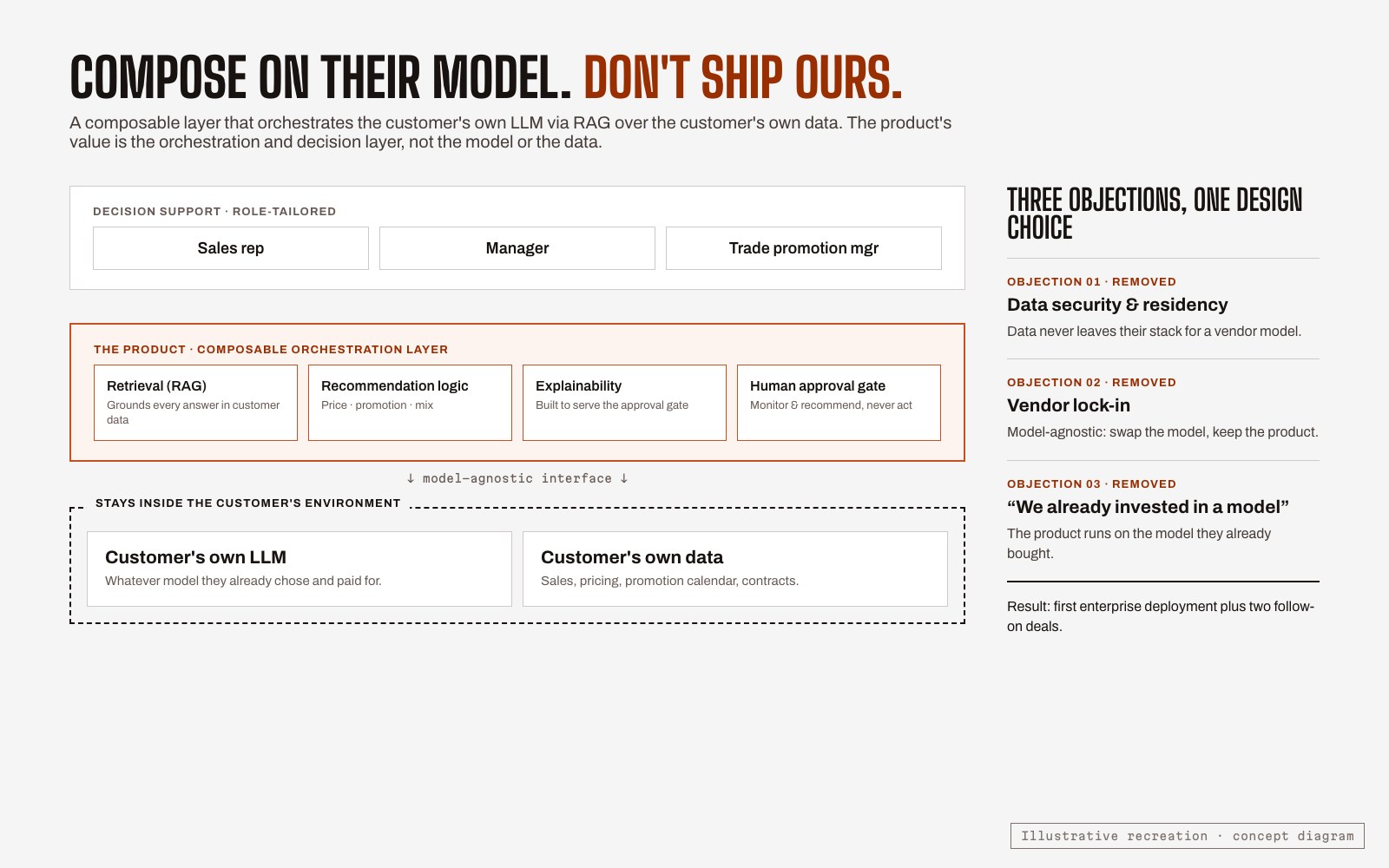
The architecture that removed three objections at once.
PMF discovery / AI architecture / Governance / Go-to-market
The problem
Buyers evaluating our agentic pricing and revenue-growth-management product kept raising three objections that stalled deals: data security and residency, vendor lock-in, and “we already invested in a model”.
Discovery
I ran jobs-to-be-done interviews with Revenue Management Directors and Commercial Finance leads at 8 target accounts, and a competitive analysis of 12 incumbent tools. The consistent finding was that buyers wanted decision support. That insight drove three roadmap pivots: reporting to recommendation engine, generic analytics to CPG-vertical-specific models, and desktop-first to field-accessible mobile views.
The architecture decision
Instead of shipping a proprietary model, I argued for and designed a composable layer that orchestrates the customer's own LLM via RAG over their own data. The product's value sat in the orchestration and intelligence layer. That one design choice removed the data-residency, lock-in, and prior-investment objections.
Governance
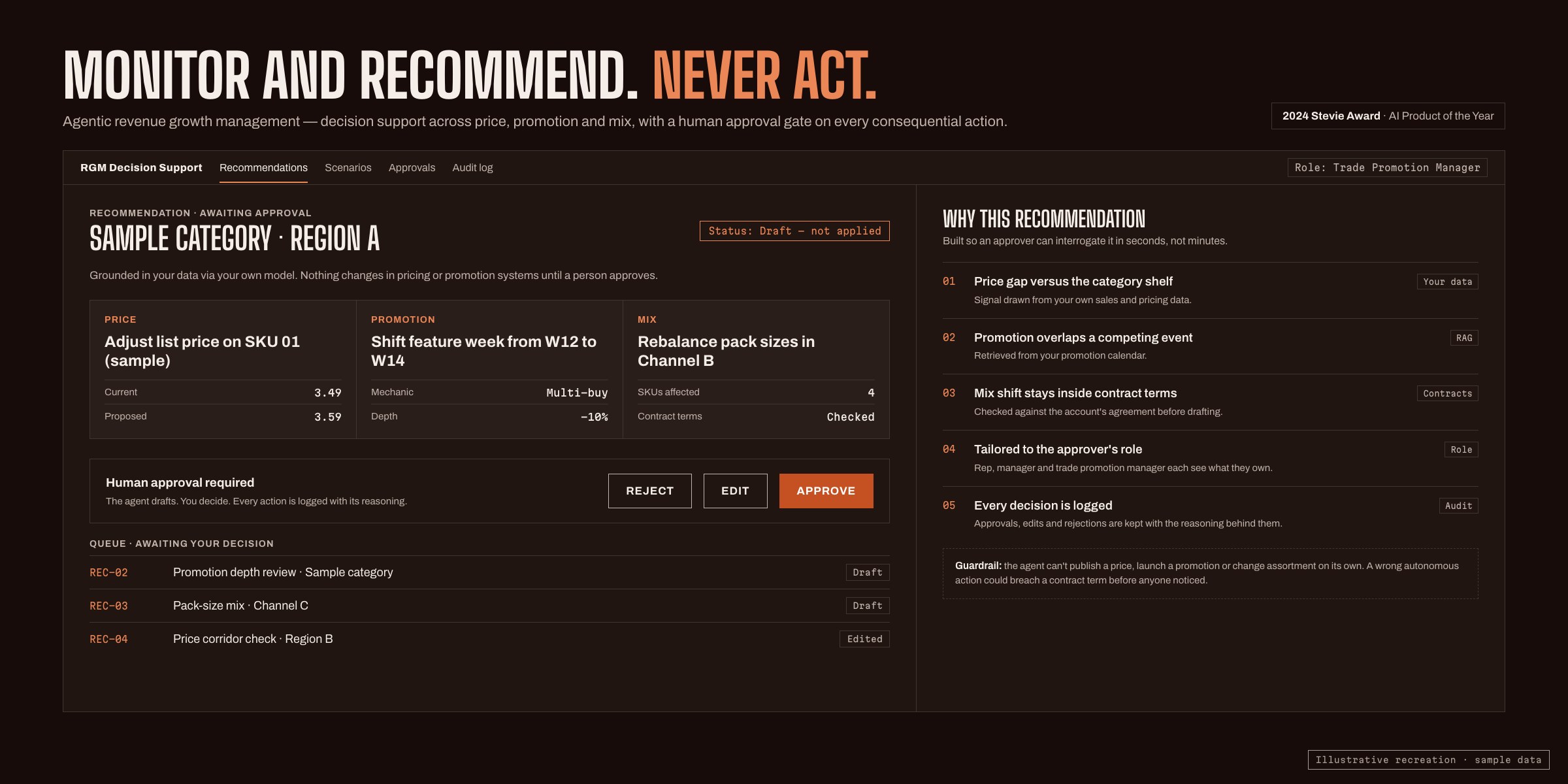
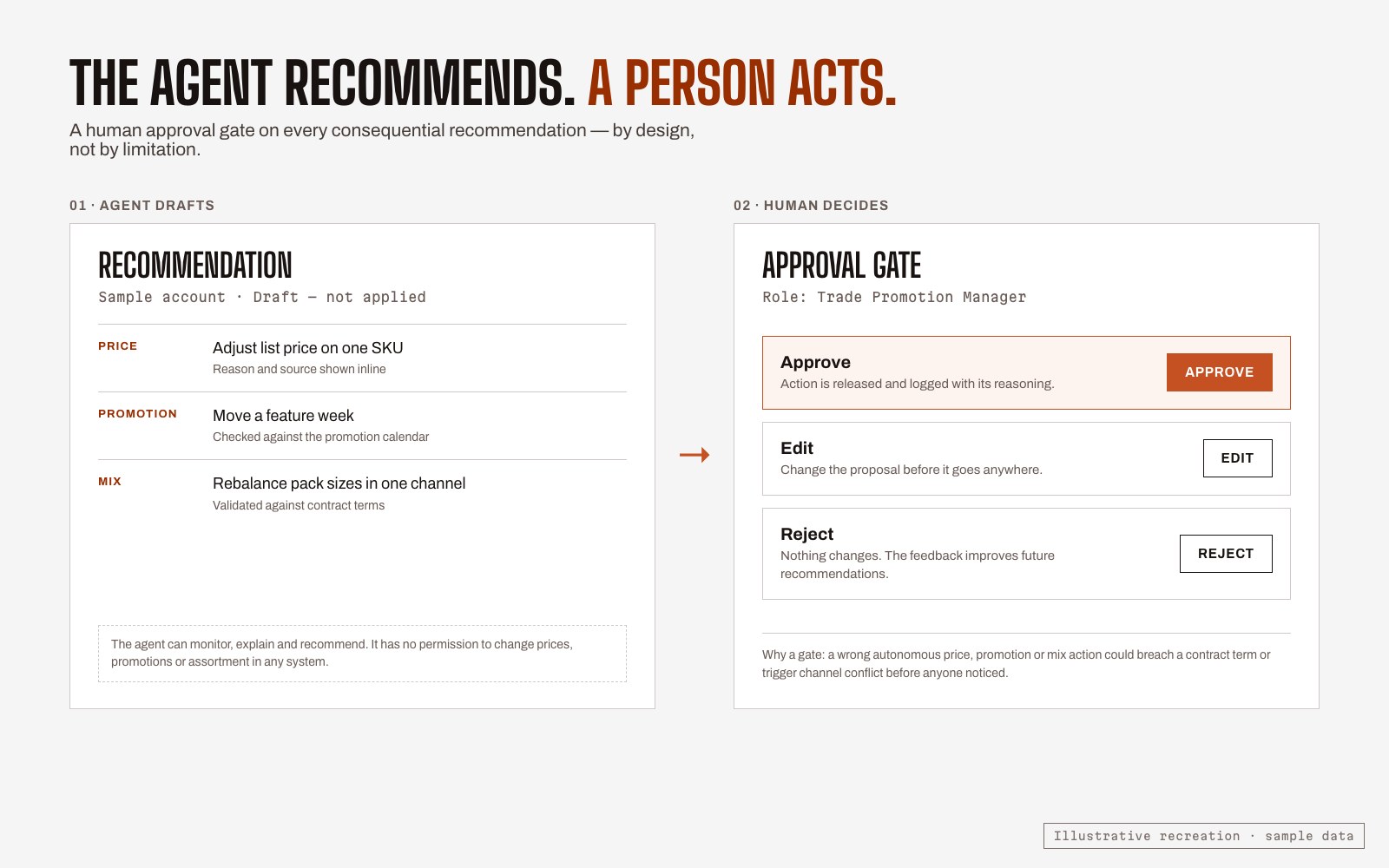
The agent could technically act on price, promotion, and mix, but a wrong autonomous action could breach a contract term or trigger channel conflict before anyone noticed. I designed it to monitor and recommend. Every consequential recommendation goes through a human approval gate, and the explainability was built for that gate, so an approver could interrogate a recommendation in seconds. Keeping a person in the loop was a design choice for this market.
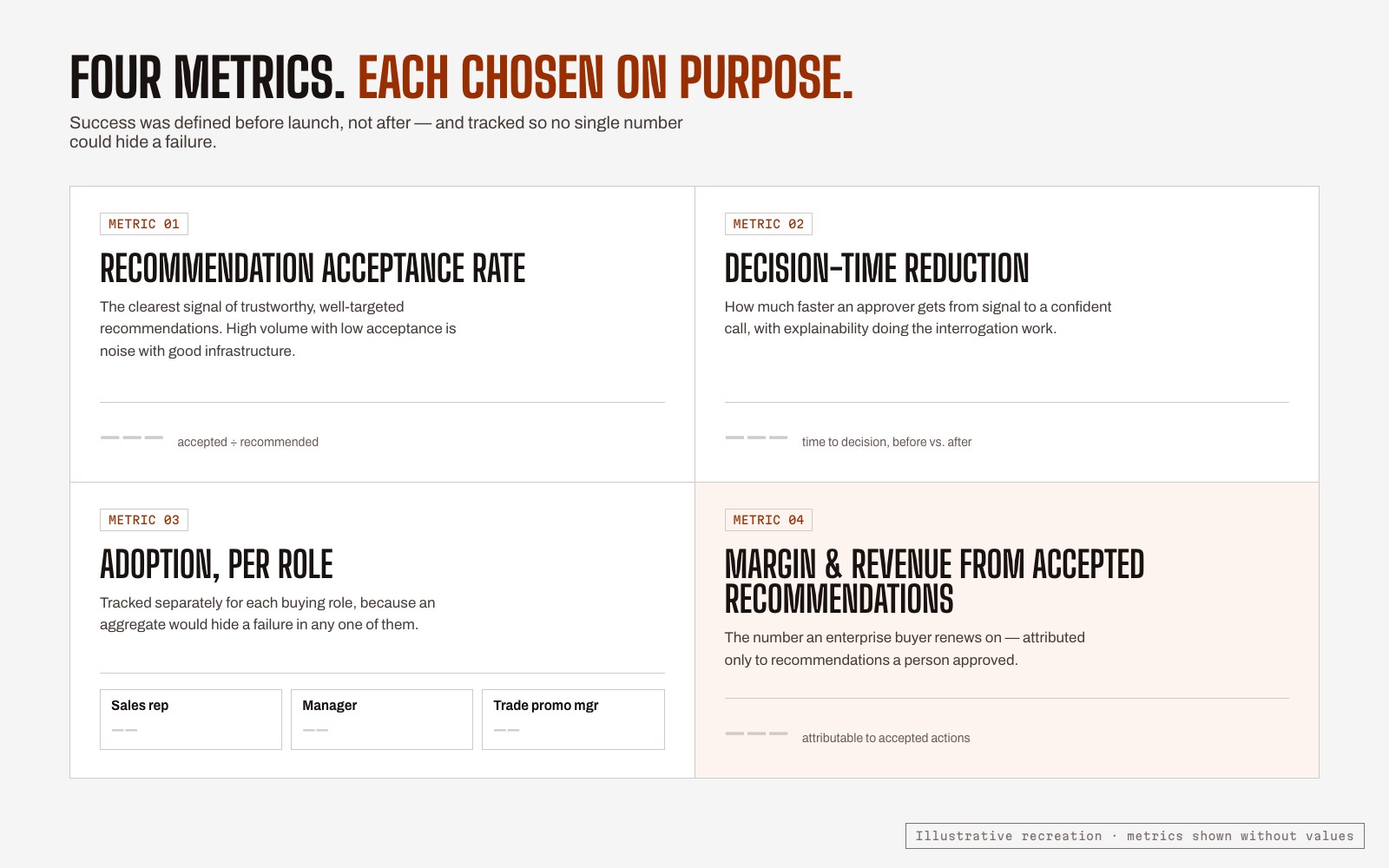
I defined success on four metrics: recommendation acceptance rate (the clearest signal of trustworthy, well-targeted feedback; high volume with low acceptance means the recommendations are noise), decision-time reduction, adoption tracked separately across rep, manager, and trade-promotion-manager roles (an aggregate number would hide a failure in any one), and margin or revenue attributable to accepted recommendations, which is the number an enterprise buyer renews on.
Go-to-market
Ideal customer: large CPG companies, $1B+ revenue, manual trade-spend processes, a Revenue Management Director with budget authority. I built competitive battlecards, ROI calculators, and capability demo scripts, and led senior-executive discovery sessions and executive presentations.
Result
Building AI into pricing or trade decisions? I have taken this problem from discovery to a paying enterprise customer.