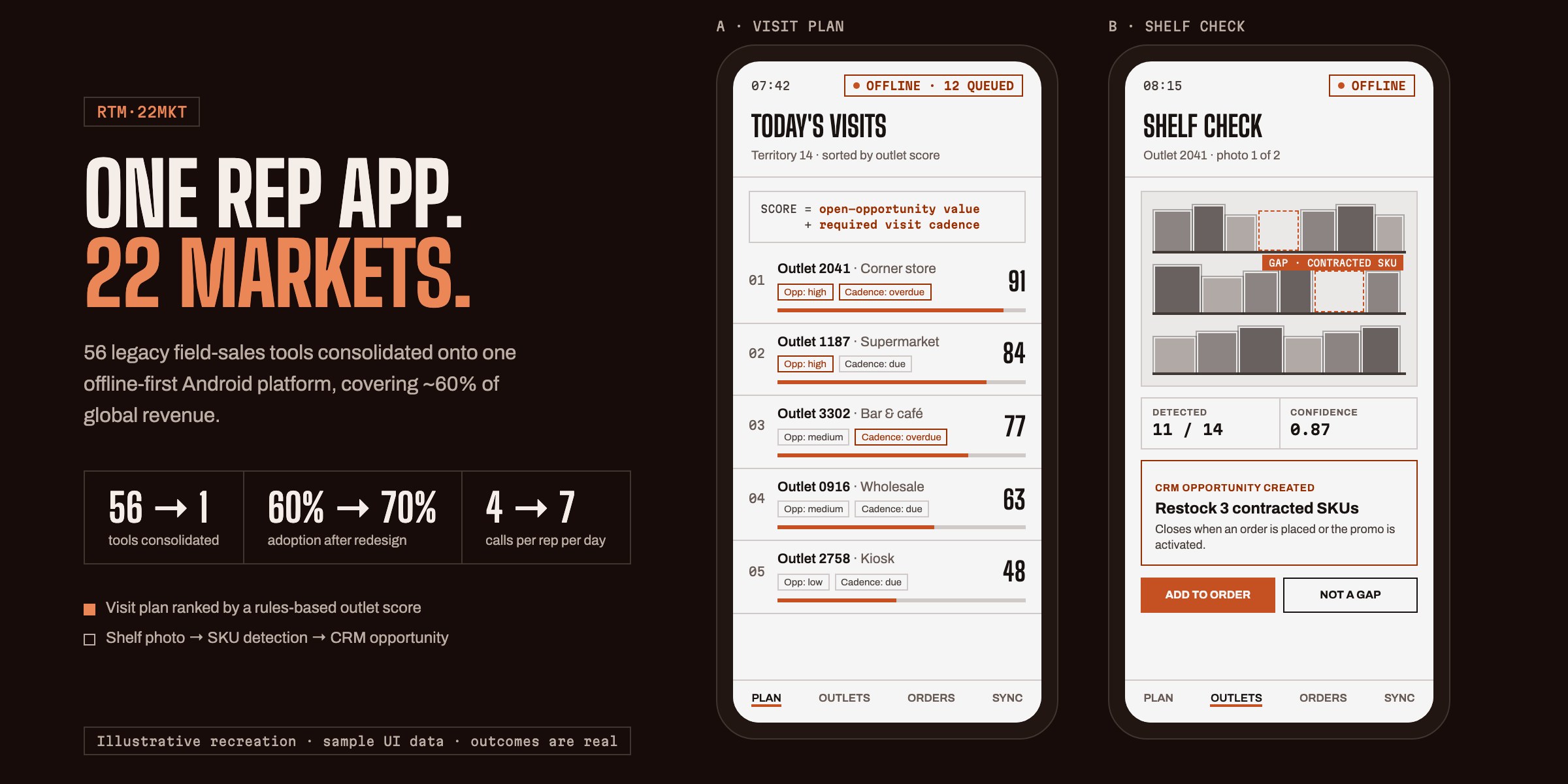
One platform for 22 markets, and the adoption stall I fixed.
Requirements / Platform consolidation / Field research / Computer vision / Build-vs-buy
The consolidation
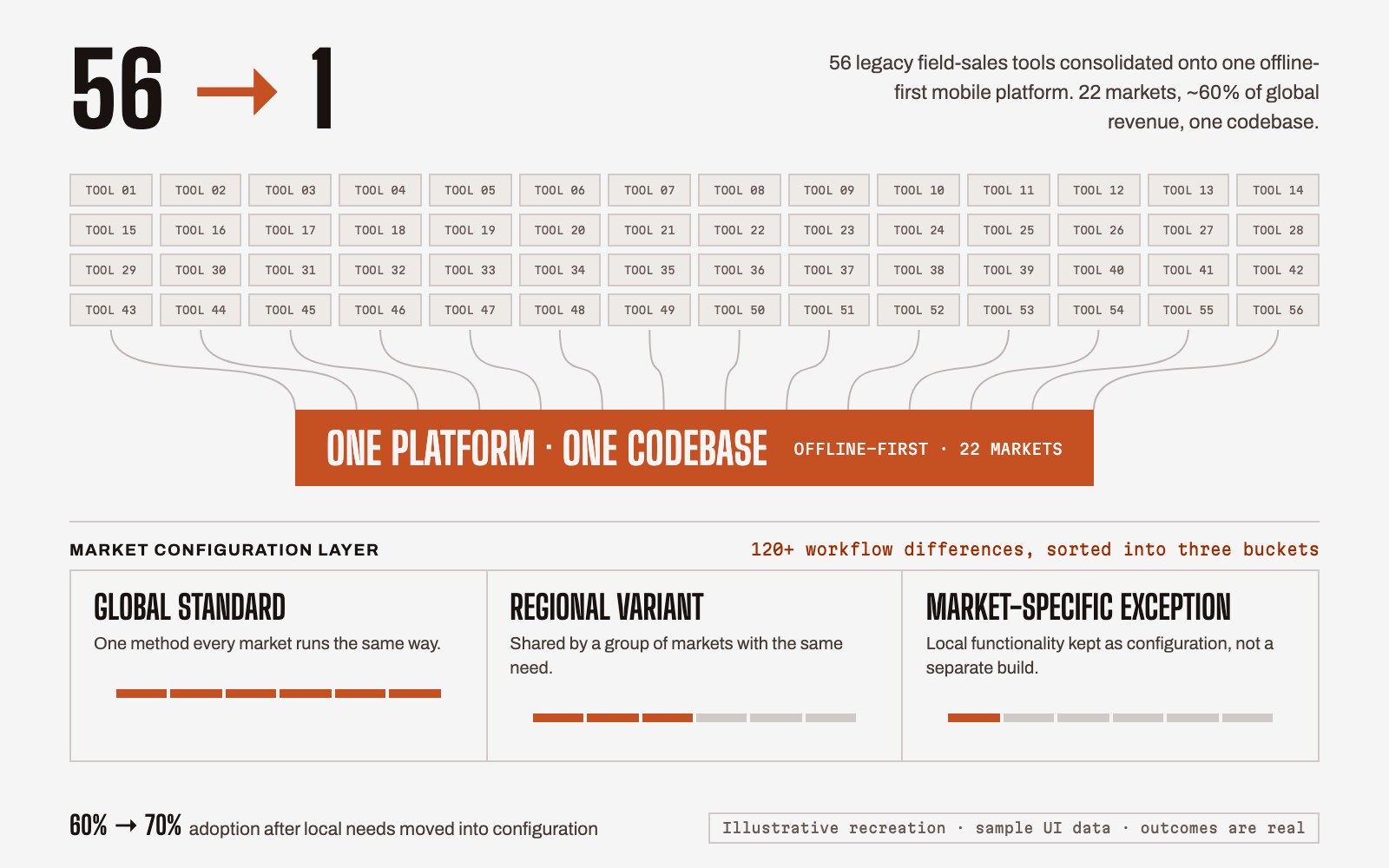
I worked as Business Analyst from 2018 to 2020 on requirements and process mapping for the MVP, then was promoted to Product Owner in 2020 and owned the platform across all 22 markets through 2024. It was a 0→1 mobile build replacing 56 legacy tools with one offline-first platform, covering roughly 60% of the client's global revenue.
Prioritization ran on RICE for cross-market features and MoSCoW for local requests, with quarterly roadmap reviews where all 22 market leads saw the same backlog scored the same way. Gap analysis surfaced 120+ workflow differences, sorted into global standard, regional variant, or market-specific exception. That framework made one codebase across 22 markets possible.
The adoption crisis
The platform shipped, but adoption stalled at 60%. Each country used a different slice of functionality, and dashboards couldn't explain why. I went to the field and shadowed reps in the most resistant market myself. The global build had ignored local requirements. The fix was “global method, local tools”: one standard methodology, with country-specific functions kept as configuration settings. Adoption moved from 60% to 70%.
Where AI fit: computer vision on the shelf
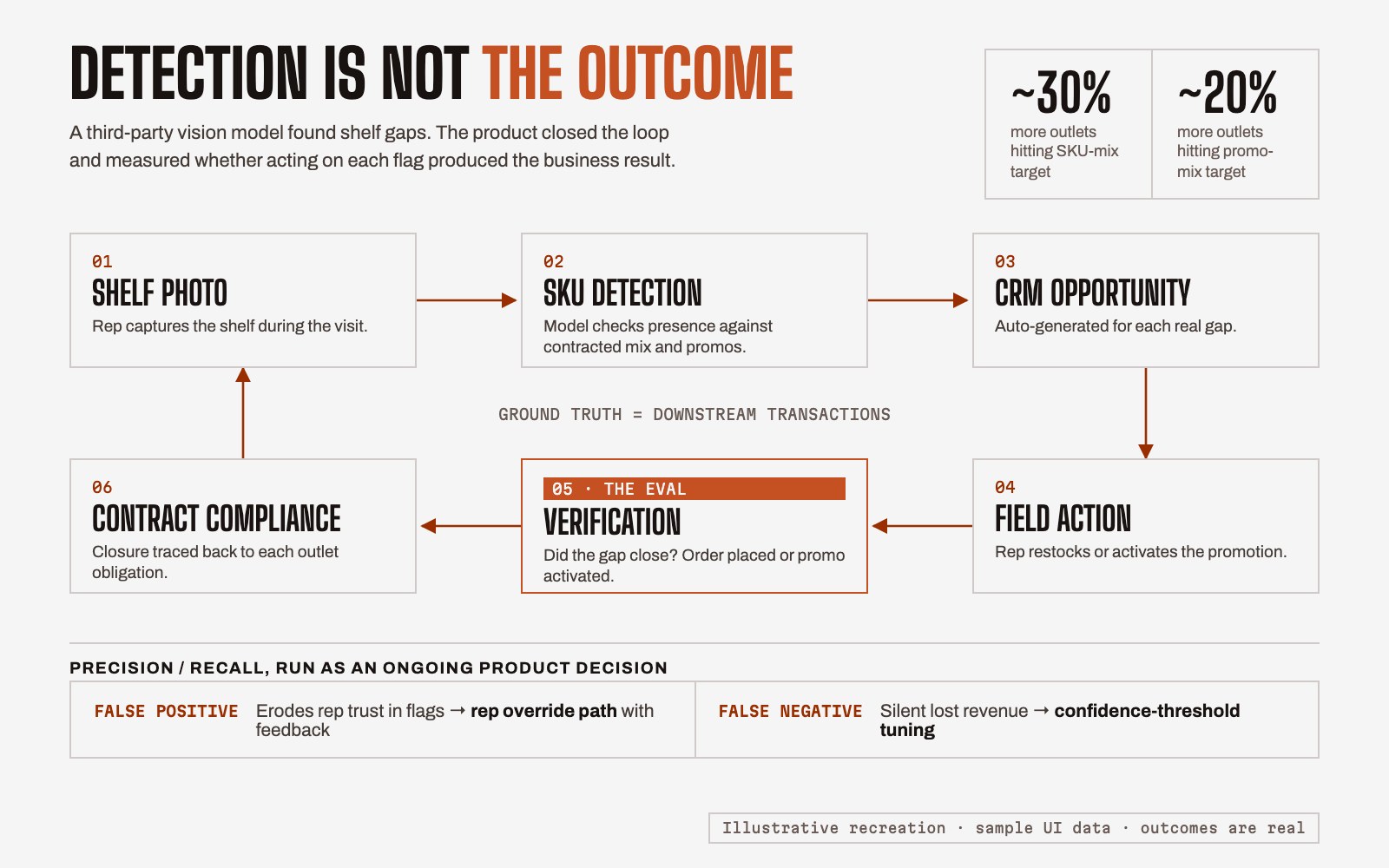
A third-party computer-vision model detected SKU presence on shelves against contracted mix and promotion targets. I owned the product integration around the model: detection → auto-generated CRM opportunity → field action → a verification loop checking whether the flagged gap actually closed → contract-compliance tracking. False positives erode rep trust in the flags, and false negatives are silent lost revenue. I managed the precision/recall tradeoff as an ongoing product decision, with a rep override path and confidence-threshold tuning.
Where AI didn't fit: route planning
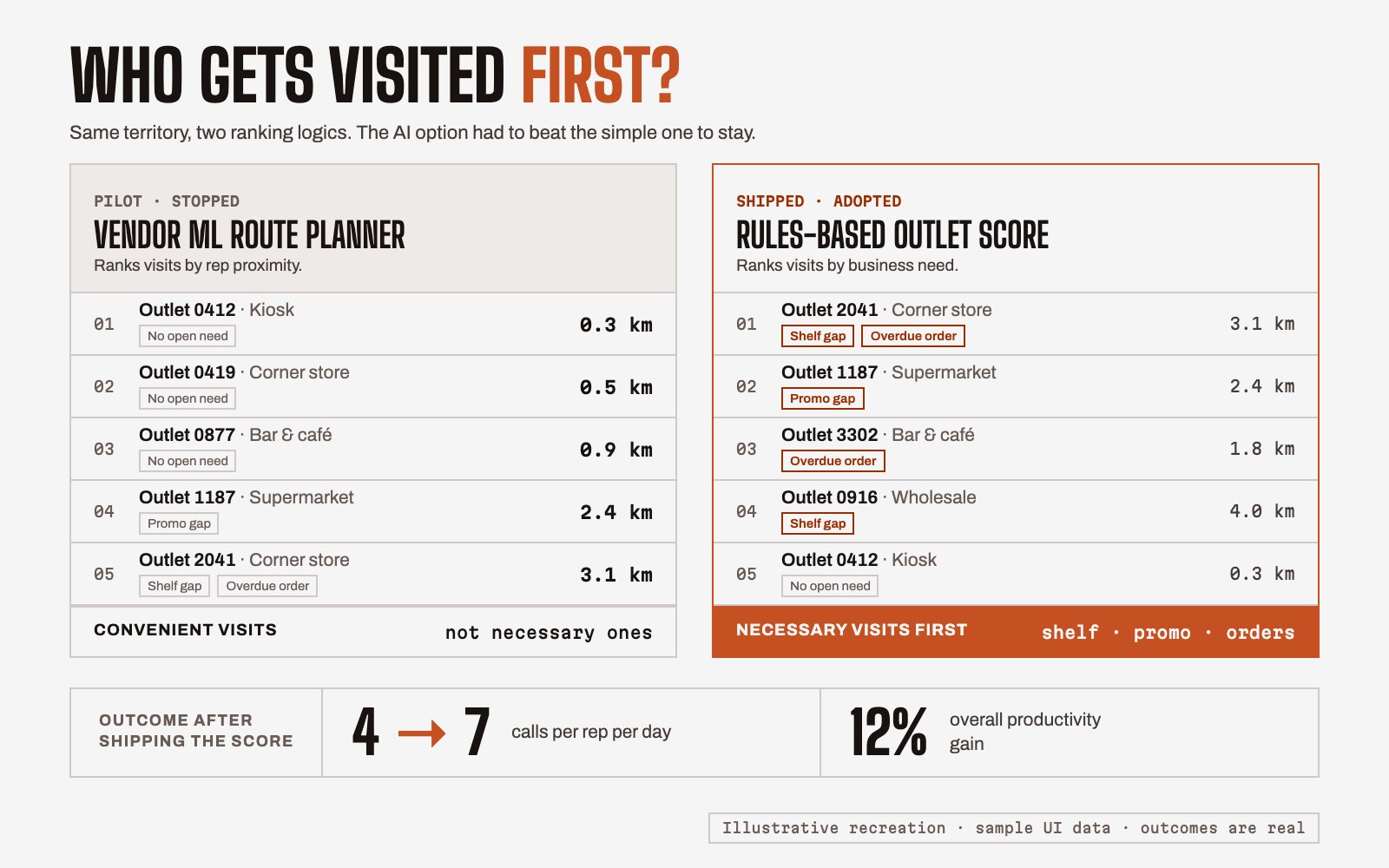
The CRM vendor pushed a pilot of its machine-learning route planner, with backing from senior leadership. During the pilot I found it was recommending visits based on rep proximity to an outlet and ignoring business need: shelf gaps, promotion gaps, overdue orders. I built a lightweight rules-based scoring engine instead, using those business-need signals directly, and shut the pilot down, even though it was the AI option leadership wanted.
Rolling a commercial platform out across markets? Adoption across 22 country teams is the part I know best.