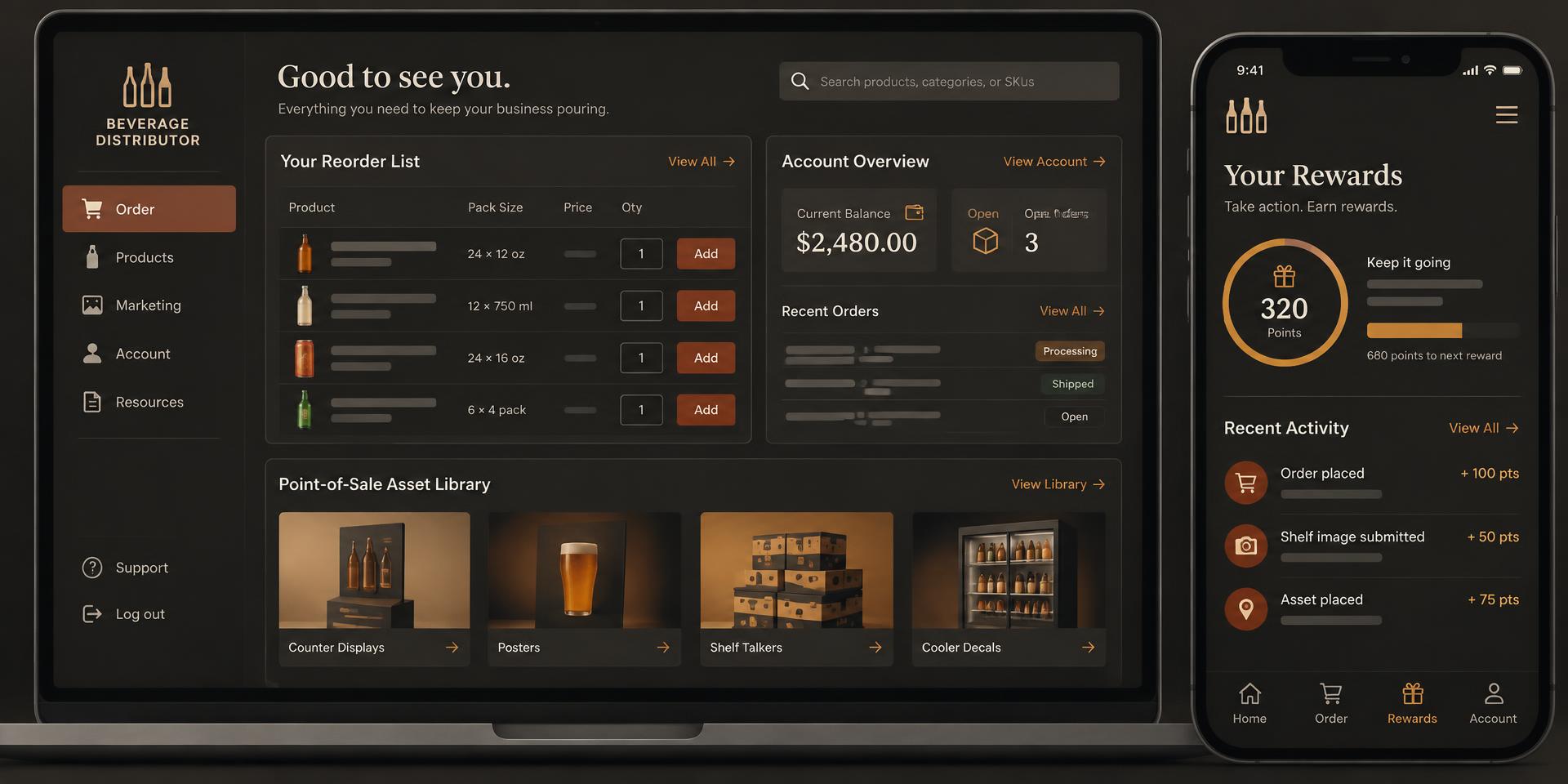
A self-service portal for 200,000 business buyers, and the loyalty design I stopped.
Journey mapping / JTBD research / Platform selection / Loyalty design / Monetization / Go-to-market
The problem
More than 200,000 business customers, the bars, restaurants, retailers and distributors who buy from the brand, had no way to serve themselves. Every order, cleaning request, point-of-sale asset download or contract question went through a sales rep. Reps were spending over 40% of their time on routine transactions instead of selling.
My role
I found the gap during customer journey mapping, took the vision to senior leadership and won executive support. I then owned the build as product owner: strategy, every PRD, discovery, and coordination across engineering, UX, data science and marketing, plus go-to-market in the pilot markets.
Discovery
I ran jobs-to-be-done interviews with 50+ business buyers across 20+ markets, analyzed voice-of-customer and NPS data on the manual processes, mapped the journey end to end and benchmarked portals across consumer goods. Buyers wanted to order, reorder and fix routine problems on their own schedule, at any hour.
Build and platform choice
I chose Salesforce Commerce Cloud over a custom build, which brought launch forward by about four months, and the portal went live in under nine months.
- MVP: self-ordering and account view
- V1.1: point-of-sale asset downloads
- V1.2: equipment service and rep scheduling
- V2: loyalty, activated through Marketing Cloud
- V2.1: contract review and monetization
I also proposed and piloted sponsored placements and tiered access, which gave the portal a path to earn revenue on top of saving cost.
The loyalty mistake I caught
The first loyalty design borrowed the consumer playbook: points for spend, tiers, redemptions. For business buyers that meant spending margin to discount volume they were already going to buy. I paused the build mid-stream, regrouped the team and redesigned every reward around an observable action: placing orders in the portal, submitting sales-execution images and placing point-of-sale assets.
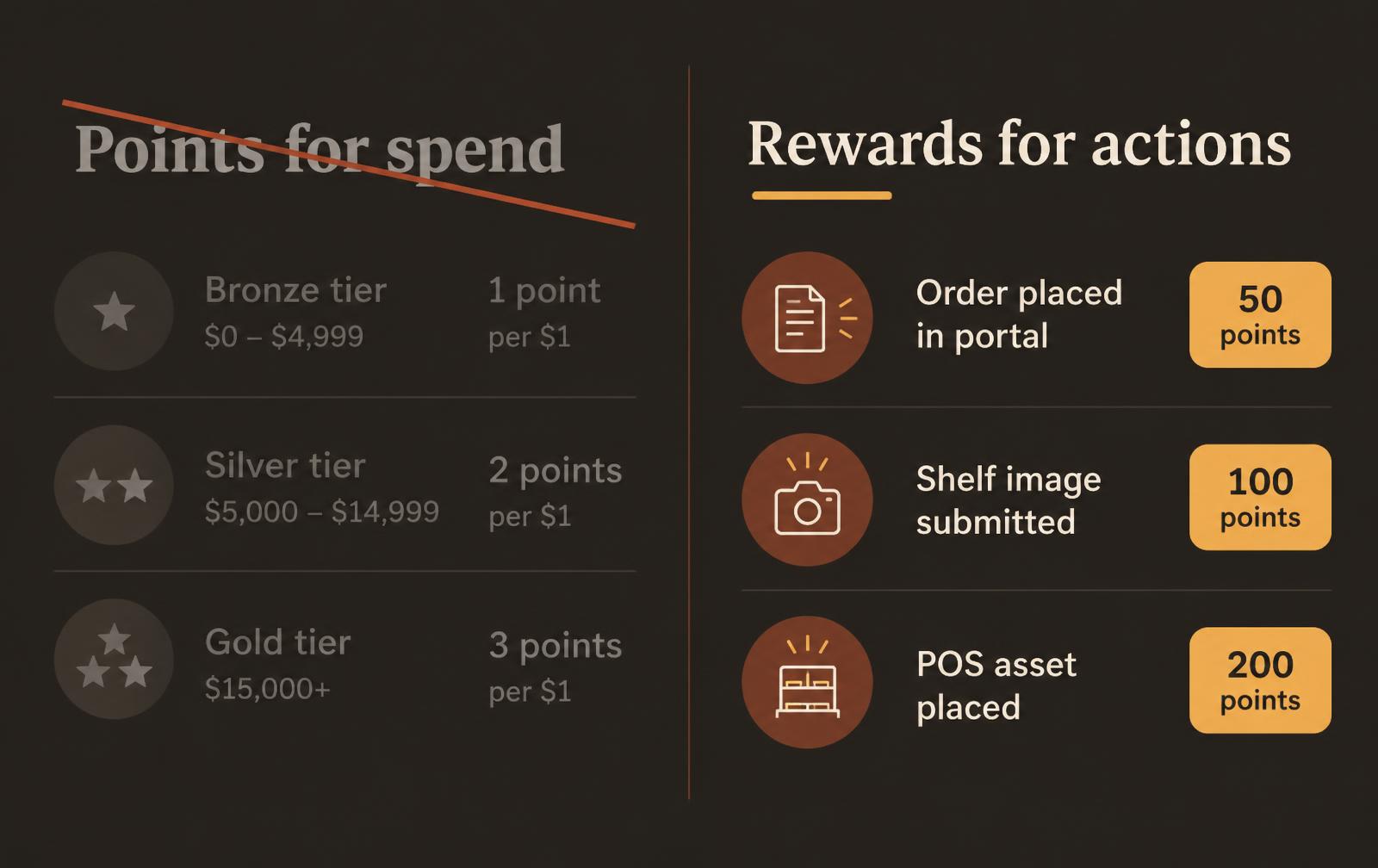
The redesign lifted adoption by 30% and helped the brand earn preferred-customer status with its buyers.
Result
Launching B2B commerce or a loyalty program for business buyers? I have taken one from journey map to 200,000 customers.